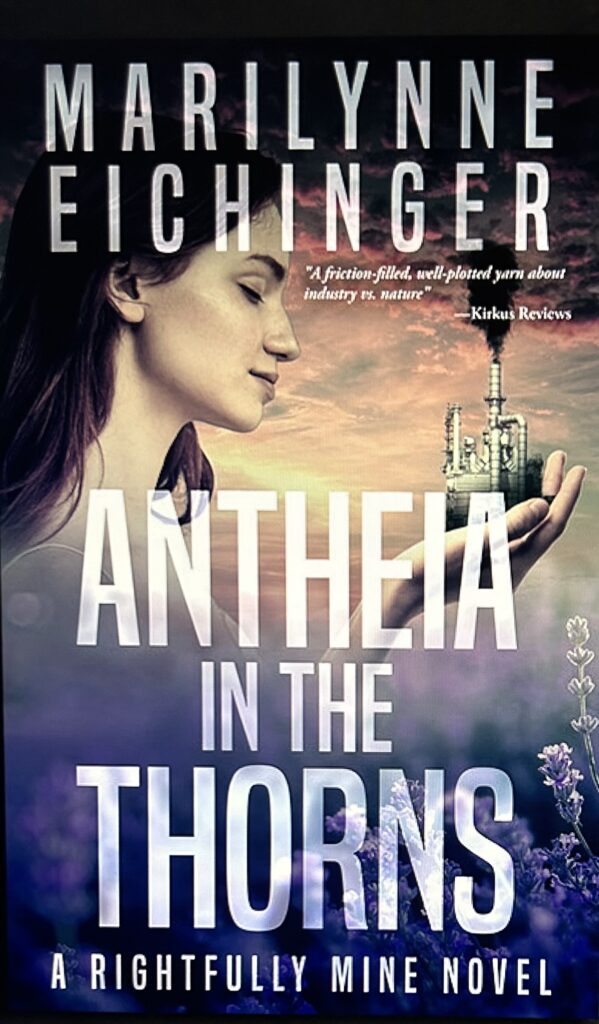
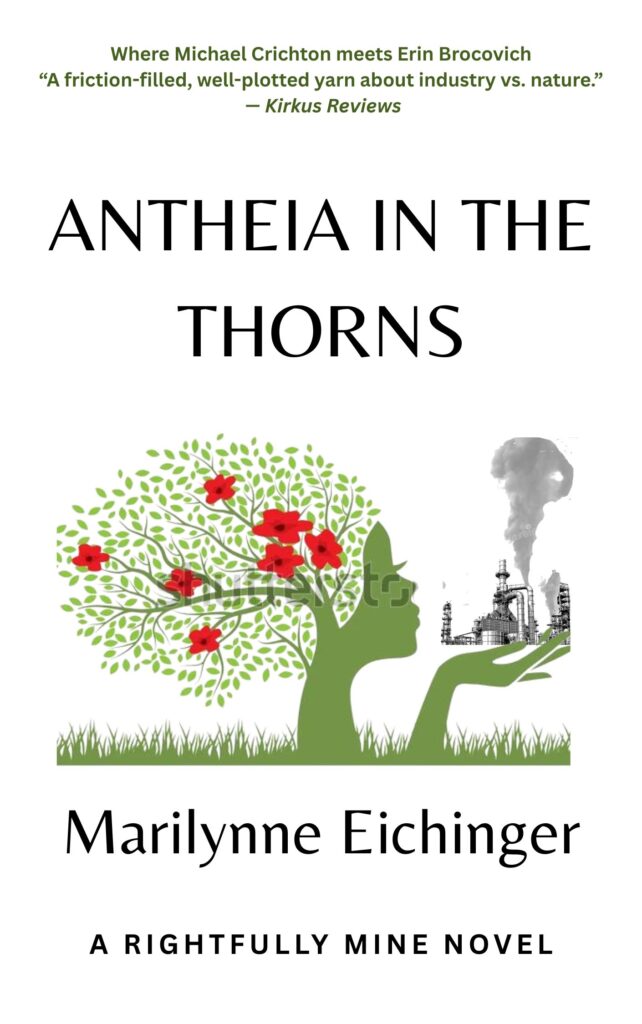
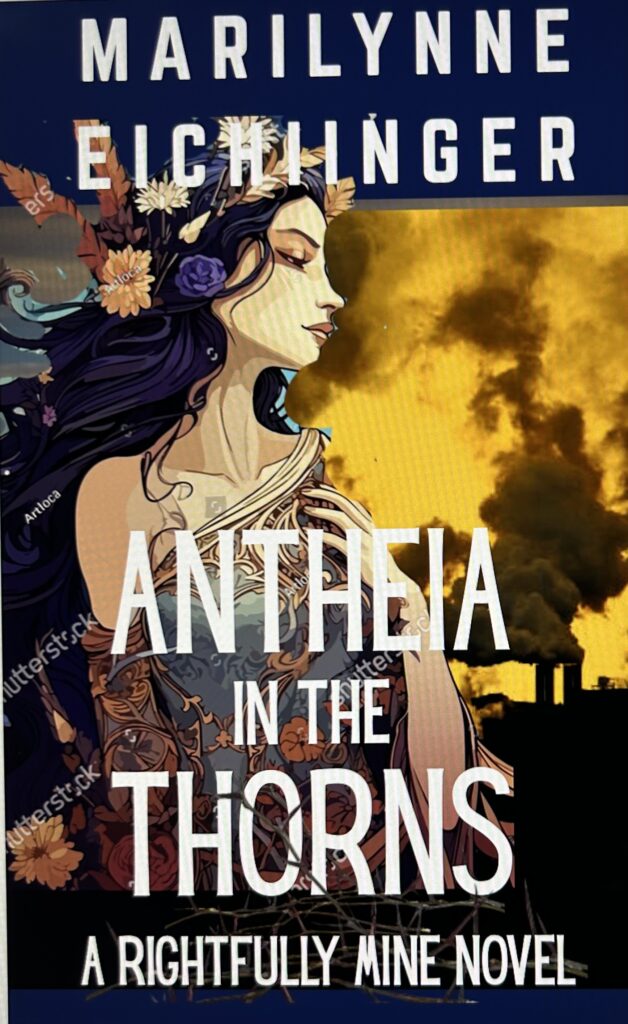
Part of writing a book is finding the right title and cover design, and Antheia in the Thorns, going on sale at the end of February, is no exception. Its early working title was The Cave, but after discovering dozens of books with the same name, I set out to find something more distinctive.
That search led me to Antheia, the Greek goddess of gardens and love. Imagining her caught in thorns felt like the perfect metaphor for an approaching environmental reckoning. Does it make you wonder what happened?
Below are four early cover designs that didn’t make the cut. The final design, created by Streetlight Graphics, will be unveiled next week. Between now and February 22, I hope to whet your appetite for the story behind the thorns.
A Scene Behind Antheia in the Thorns:When I began writing Antheia in the Thorns, I didn’t start with a thesis. I started with a scene.
In the chapter titled “Dying Embers,” the protagonist, Bear Stanton, sits on a curb in the early morning hours, watching smoke rise from what had once been Antheia’s headquarters. Firefighters are packing up their hoses. Reporters circle, microphones extended, eager for outrage or accusation. Somewhere inside the charred building are lost hard drives, children’s artwork, handwritten notes from tribal elders—things that will never make the news crawl.
What struck me as I wrote that scene wasn’t the fire itself, but the silence afterward. The way catastrophe becomes ordinary once the cameras leave. The way destruction is framed as spectacle rather than consequence.
That moment on the curb is fictional, but its emotional truth is not.
As I mentioned in my previous post, I watched a NOVA program detailing how warming temperatures are destabilizing the Arctic, releasing methane, sinking cities, and accelerating flooding across the globe. These aren’t distant projections or worst-case scenarios. They are unfolding now, quietly, incrementally, often out of sight. When disaster doesn’t arrive with a single dramatic explosion, it’s easier to ignore.
In Antheia in the Thorns, the fire is not just an act of violence—it’s a message. It’s meant to intimidate, to erase evidence, to remind ordinary people how fragile their work is when it challenges powerful interests. That dynamic plays out repeatedly in real life, whether through lawsuits, regulatory pressure, misinformation campaigns, or the slow erosion of public trust in science.
Fiction allows me to place a human face on those forces. To show what it feels like to lose not only a building, but a sense of safety. To ask what happens when the cost of telling the truth becomes personal—and whether it’s still worth paying.
I don’t expect novels to change the world on their own. But I do believe stories can slow us down long enough to feel what headlines encourage us to skim past. If Antheia in the Thorns does anything, I hope it helps readers connect the data we’re shown every day to the lives quietly affected by it—and to the choices still within our control.
Sometimes, the most dangerous fires aren’t the ones that burn buildings, but the ones we pretend not to see.
The Water Factor, the first book in the Rightfully Mine Series, questions whether water should be considered a commodity, as it is now, or a human right. Antheia in the Thorns raises a similar question about air quality. The novel is available in ebook, paperback, and audio formats. It can be purchased on AMAZON, Barnes and Noble, and as an audiobook on Amazon, Audible, and iTunes.
Writing a book is a drawn-out process that includes searching for the right title and cover design. The following discusses a few of my blips on the way to releasing Antheia In The Thorns by February 22. https://www.eichingerfineart.com/blog/204684/countdown-to-publishing I hope you will help spread the word when it is released.