ACCESS TO CLEAN WATER IS ON A SLIPPERY SLOPE
Access to clean, inexpensive water is on a slippery slope as governments give up management of their water systems to for-profit corporations. Last week, I took a Bull Run Watershed Tour to learn more about how Portland’s water is delivered. It was designated as the city’s water source in 1890 and currently serves approximately 950,000 residents. Like Seattle and Manhattan, Portland’s water is not filtered.
A second reason for the trip was to investigate whether a corporate subcontractor might be contributing to rising water rates. Across the nation, many communities outsource water management to private companies, firms that often prioritize shareholder profits over cost containment for customers. When I asked several people in the Water Bureau about this, I was assured that Portland’s water and waste systems are managed in-house. Yet the information forwarded to me was so confusing, with pages of names and numbers, that it was impossible to find a clear answer.
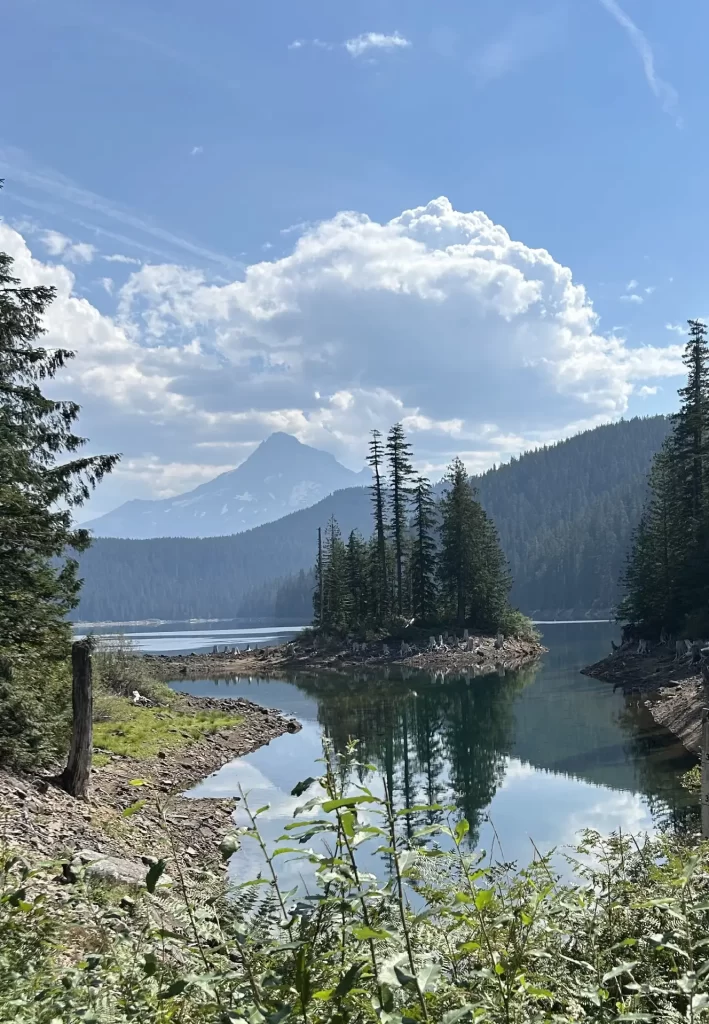
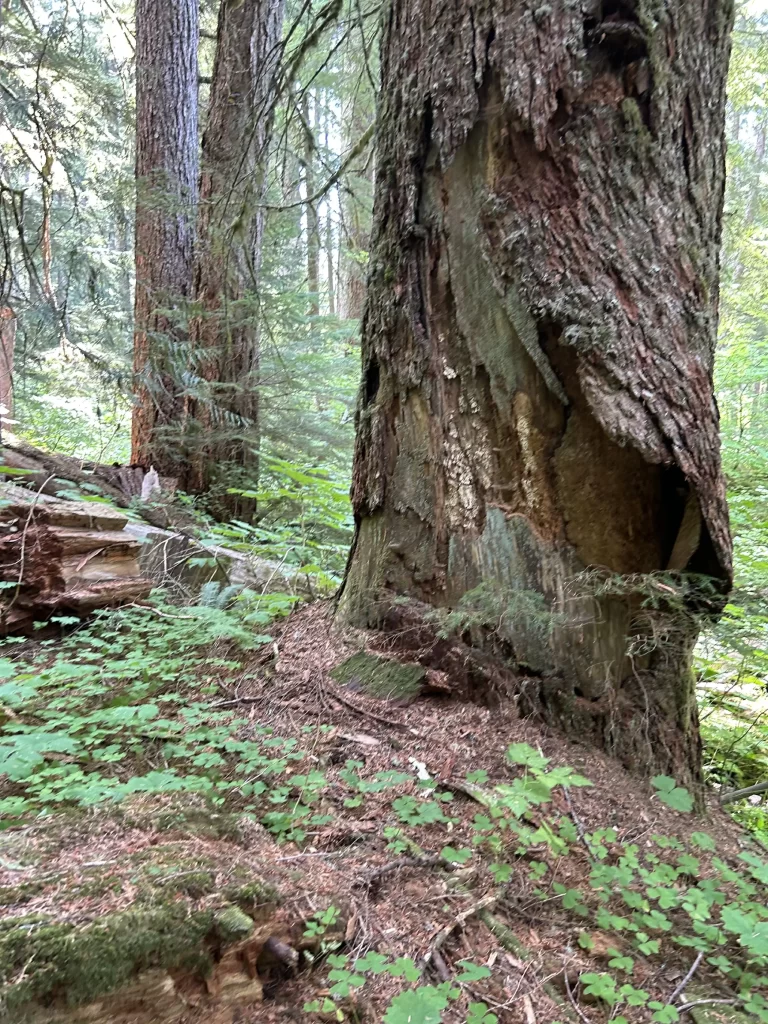
The tour began with a beautiful hike through a 750-year-old forest to the headwaters, where a spring bubbles up from the ground to form the river. This river flows through a 140-square-mile area jointly managed by the Portland Water Bureau and the U.S. Forest Service. Although logging was permitted until the mid-1960s, it is now prohibited. The system includes two reservoirs created by dams on the Bull Run River. While this is Portland’s primary water source, the city also maintains a groundwater well field as a backup in case of emergency.
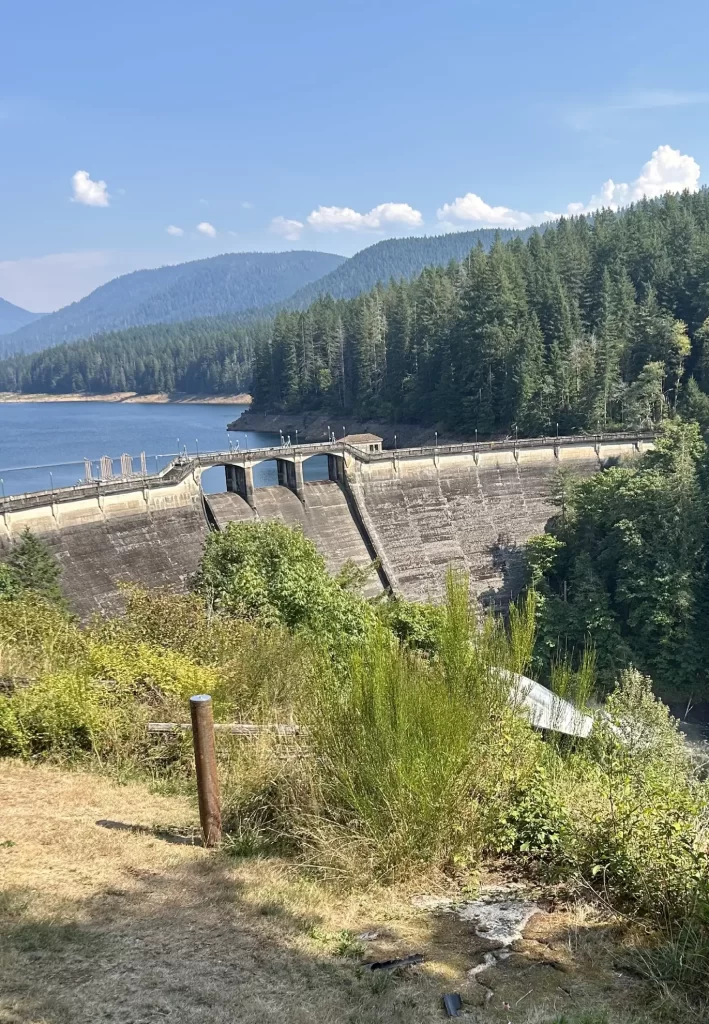
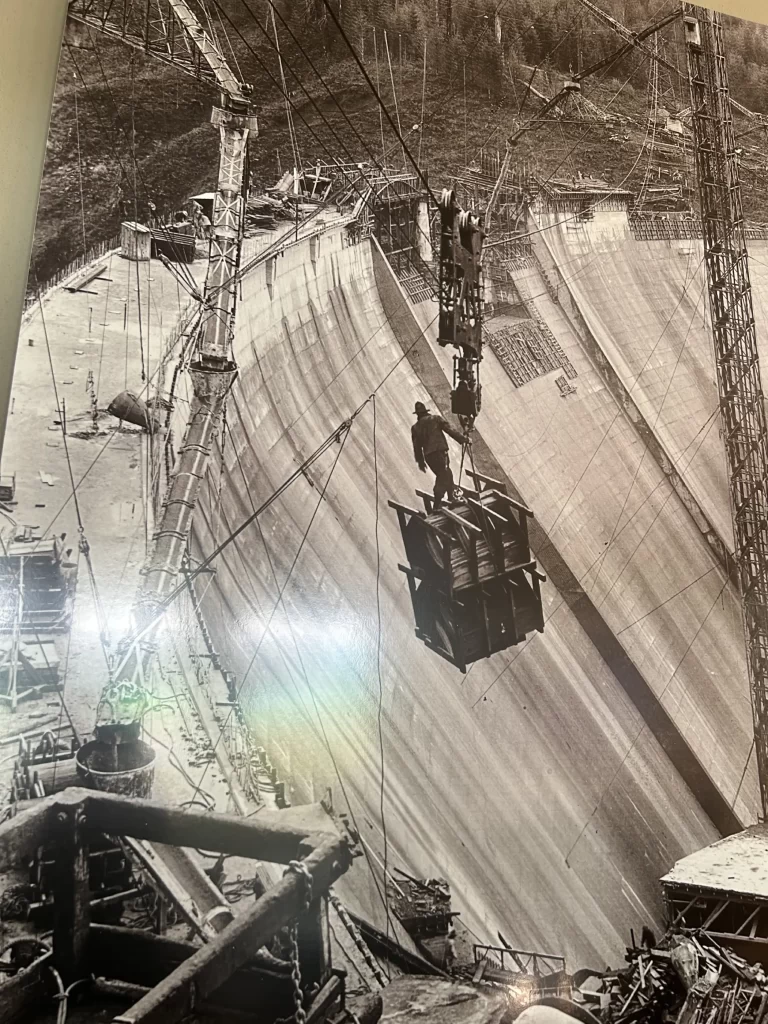
I was especially fascinated by the dams. The first, completed in 1929, was designed and managed entirely by in-house staff. Despite the absence of OSHA at the time, the dam was built in just two years, under budget, and with no casualties. The second dam, built in 1962, tells a different story. Smaller than the first, it was subcontracted to consultants. Construction dragged on for four years, ran over budget, and resulted in the deaths of four workers.
There is also a diversion stream, left untreated, to support fish runs. The main supply, however, is treated with chlorine, ammonia, sodium carbonate, and carbon dioxide. More recently, Portland began building a $2 billion filtration system to remove Cryptosporidium, in compliance with federal and state regulations, and to increase resilience against natural disasters such as wildfires and landslides. Unsurprisingly, the design and construction were contracted out. What surprised me was learning that a management contract is already in place for after completion. When finished in 2027, Portland area customers will receive treated water from Pleasant Home Water District.
From the research I’ve conducted over the past four years, this is often how corporate takeovers of local water systems begin: construction contracts gradually expand into management. Transparency is nearly impossible, as costs can be hidden in dozens of ways. Water bills inevitably rise. A 2022 study by researchers at Cornell University and the University of Pittsburgh found that private ownership is linked to higher water prices and reduced affordability. The oft-repeated claim that private companies run water systems more efficiently than government agencies is a myth. The corporate takeover of water is a slippery slope.
Your comments are always appreciated.
___________________________________
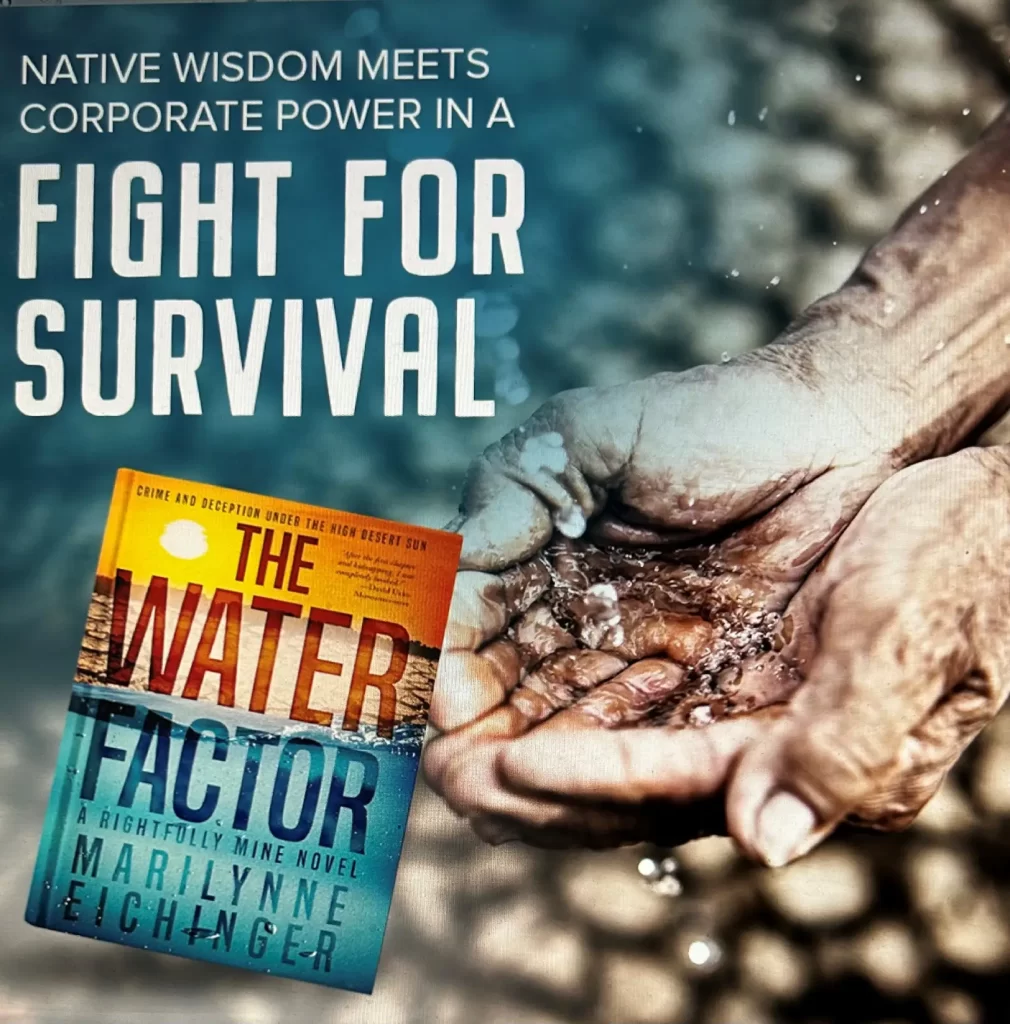
I wrote The Water Factor after years of researching the aftermath of water being designated a commodity rather than a right. It’s why a twenty-year-old became an eco-activist, willing to put his life on the line to reclaim a Native tribe’s right to water? The Water Factor presents a powerful example of what happens when people become fed up with corporate greed; they overcome their fears and act. The book is a Firebird International Award winner for Best Dystopian Novel and a Literary Titan recipient for Best Thriller, available in ebook, paperback, and audio formats. Available for purchase on Amazon, Barnes & Noble, Powell’s Books, and Annie Bloom’s Books, as well as in other national stores, and on audiobook platforms such as Amazon, Audible, and iTunes.